在用 python 编写多线程程序时,经常需要用 Ctrl + C 中止进程,可是大家都知道,在 python 中,除了主线程可以响应控制台的 Ctrl + C ,其他线程是无法捕获到的,也就是说,当主线程被中止后,其他线程也会被强制中止,这样线程们就没有机会处理自己还没有完成的工作。
而在实际应用中,我们可能会有这样的要求:
当按下 Ctrl + C 时,我们希望所有线程先处理完自己的任务,再主动停止
当所有线程停止后,主线程才终止
【这篇文章】提供了一种方法,我对其做了进一步改进,写了如下的代码,希望能起到抛砖引玉的作用:
1
2
3
4
5
6
7
8
9
10
11
12
13
14
15
16
17
18
19
20
21
22
23
24
25
26
27
28
29
30
31
32
33
34
35
36
37
38
39
40
41
42
43
44
45
46
47
48
49
50
51
52
53
54
55
56
57
58
59
60
|
import threading
class MyThread(object):
def __init__(self, thread_num):
self.thread_num = thread_num
self.outLock = threading.Lock()
self.threads = []
self.interruptEvent = threading.Event()
def beginTask(self):
for i in range(self.thread_num):
t_name = str(i + 1)
thread = threading.Thread(target=self.doSomething, kwargs={"t_name": t_name})
self.threads.append(thread)
for thread in self.threads:
thread.start()
self.interruptEvent.clear()
while True:
try:
alive = False
for thread in self.threads:
alive = alive or thread.isAlive()
if not alive:
break
except KeyboardInterrupt:
self.interruptEvent.set()
def doSomething(self, t_name):
self.outLock.acquire()
print u"线程 %s 已启动" % t_name
self.outLock.release()
while True:
try:
if self.interruptEvent.isSet():
raise KeyboardInterrupt
except KeyboardInterrupt:
self.outLock.acquire()
print u"用户强制中止主线程,线程 %s 已中止" % t_name
self.outLock.release()
break
self.outLock.acquire()
print u"线程 %s 已停止" % t_name
self.outLock.release()
if __name__ == "__main__":
t = MyThread(5)
t.beginTask()
|
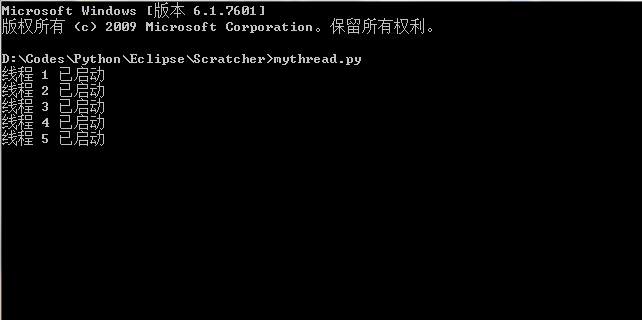
程序启动后,如图 1 所示:
按下 Ctrl + C 后,如图 2 所示:
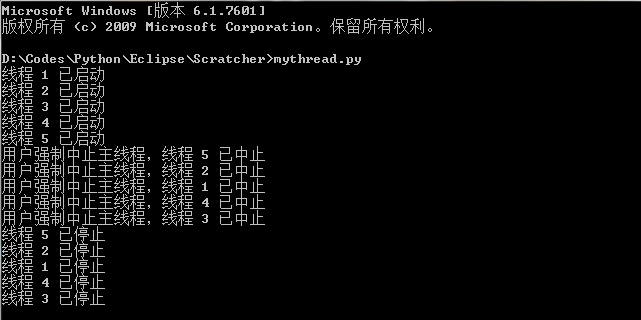
这样各个线程都有机会处理自己的任务后主动停止,随后主线程再终止。